

Report
A heart attack
§introduction
§Definition of anxiety
§Conditions in which one experiences anxiety
§Symptoms of anxiety
§Types of anxiety
§Difference between anxiety and fear
Causes of anxiety
Report: Anxiety
Table of Contents
- Introduction
- Definition of Anxiety
- Conditions in Which One Experiences Anxiety
- Symptoms of Anxiety
- Types of Anxiety
- Difference Between Anxiety and Fear
- Causes of Anxiety
- Frequently Asked Questions (FAQ)
1. Introduction
Anxiety is one of the most common mental health challenges worldwide, affecting an estimated 4.4% of the global population at any given time and nearly 30% of adults in the United States at some point in their lives (WHO). While occasional anxiety is a normal response to stress, anxiety disorders involve excessive, persistent worry that interferes with daily functioning and quality of life. This detailed report explores anxiety in depth—defining it, outlining the situations that trigger it, describing its symptoms, categorizing its types, differentiating it from fear, and examining its causes. By shedding light on this pervasive condition, we aim to provide clarity, reduce stigma, and empower readers with the knowledge to recognize and seek treatment for anxiety.

2. Definition of Anxiety
Anxiety is an emotional and physiological state characterized by feelings of apprehension, tension, and unease about potential future threats or uncertain scenarios. Clinically, anxiety is defined as a “state of apprehension, tension, or uneasiness that stems from the anticipation of danger, which may be internal or external” (NCBI Bookshelf). Unlike fear, which is a response to an immediate, identifiable threat, anxiety is typically future-oriented and often disproportionate to the actual risk.
Anxiety becomes a disorder when the intensity, frequency, and duration of anxiety responses are excessive relative to the situation, leading to significant distress or impairment in social, occupational, or other important areas of functioning (APA).

3. Conditions in Which One Experiences Anxiety
While anxiety can arise in virtually any context, certain conditions and situations are known to commonly trigger anxiety in susceptible individuals. These include:
• Life Transitions: Major changes such as starting a new job, moving, getting married, or retiring can provoke anxiety.
• Performance Situations: Public speaking, exams, job interviews, or sports competitions often induce performance anxiety.
• Social Interactions: Meeting new people, attending parties, or engaging in group activities can trigger social anxiety.
• Health Concerns: Worry about personal or loved ones’ health, medical procedures, or chronic illnesses can fuel health anxiety.
• Financial Strain: Debt, job loss, or economic downturns can lead to persistent financial anxiety.
• Traumatic Events: Natural disasters, accidents, violence, or abuse can precipitate acute or chronic anxiety responses.
• Ongoing Stressors: Relationship conflicts, caregiving responsibilities, or workplace pressure contribute to generalized anxiety.
While these conditions are common catalysts, anxiety disorders may also arise spontaneously or in the absence of identifiable external triggers. In such cases, biological vulnerabilities and internal thought patterns play a significant role in perpetuating anxiety.

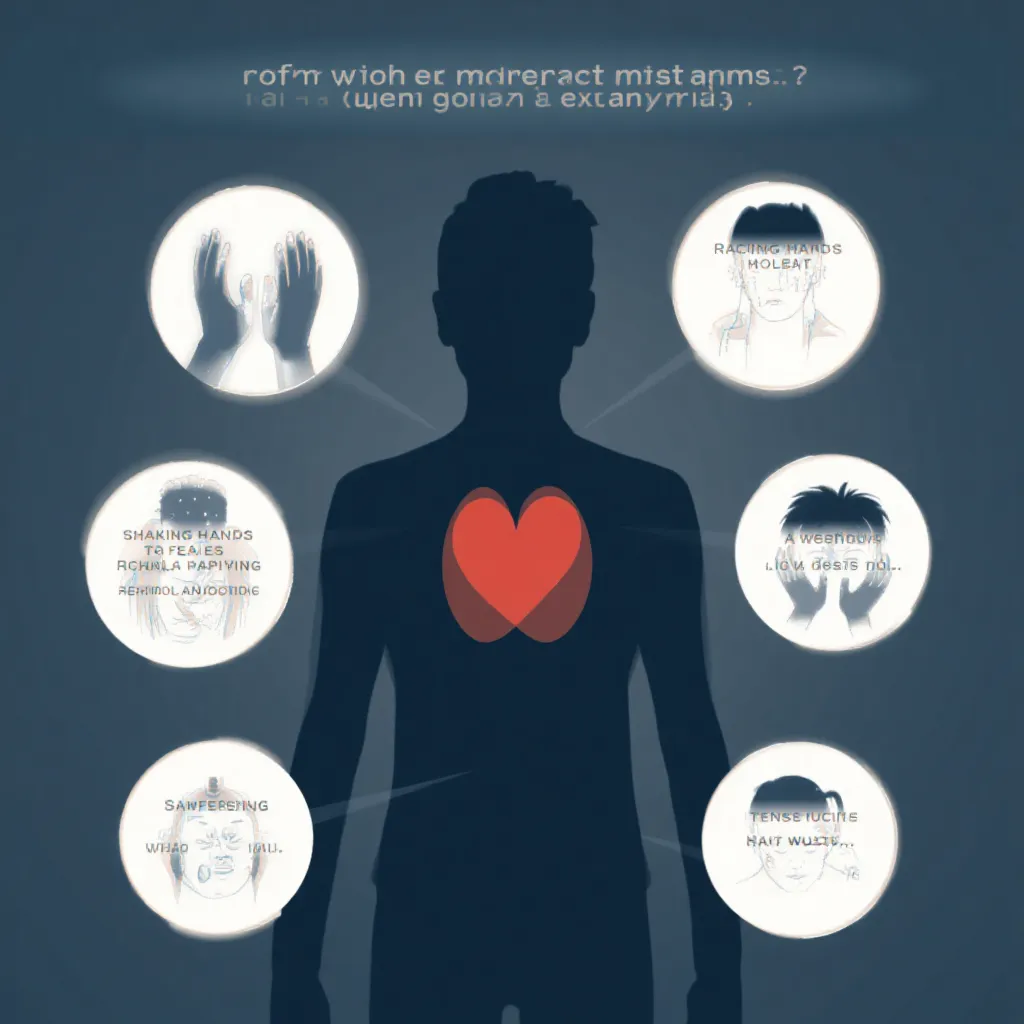
4. Symptoms of Anxiety
Anxiety manifests across cognitive, emotional, behavioral, and physical domains. Recognizing the full spectrum of symptoms is crucial for early identification and intervention.
4.1 Cognitive Symptoms
- Excessive worrying about everyday events or future uncertainties
- Difficulty concentrating or mind going blank
- Indecisiveness and overthinking
- Anticipation of worst-case scenarios
- Intrusive, repetitive thoughts
4.2 Emotional Symptoms
- Persistent feelings of dread, apprehension, or unease
- Irritability, restlessness, or feeling on edge
- Overwhelming sense of impending doom
4.3 Behavioral Symptoms
- Avoidance of anxiety-provoking situations
- Procrastination or indecisiveness to escape stressors
- Compulsive behaviors aimed at reducing anxiety (e.g., checking, reassurance-seeking)
- Social withdrawal or isolation
4.4 Physical Symptoms
- Increased heart rate (palpitations) (Mayo Clinic)
- Rapid breathing or hyperventilation
- Sweating, trembling, or shaking
- Muscle tension or aches
- Gastrointestinal upset, nausea, or diarrhea
- Headaches or migraines
- Fatigue or weakness
- Sleep disturbances, such as insomnia or restless sleep
Recognizing these symptoms—especially when they cluster and persist for six months or more—is the first step toward seeking professional evaluation and care.
5. Types of Anxiety
Anxiety disorders encompass several specific diagnoses, each defined by its predominant symptoms and patterns of fear and avoidance. The most common types include:
5.1 Generalized Anxiety Disorder (GAD)
Persistent, excessive worry about multiple domains—work, health, family, finances—that is difficult to control and occurs most days for at least six months. Physical symptoms such as restlessness, muscle tension, and sleep disturbances often accompany GAD (WHO).
5.2 Panic Disorder
Recurrent, unexpected panic attacks—sudden surges of intense fear peaking within minutes—accompanied by physical symptoms like chest pain, shortness of breath, and dizziness. Worry about future attacks and avoidance of situations where escape might be difficult often develop (APA).
5.3 Social Anxiety Disorder (Social Phobia)
Intense fear of social situations in which one may be scrutinized, judged, or humiliated. Avoidance of public speaking, parties, or social gatherings is common. Anticipatory anxiety can begin weeks before an event (Mayo Clinic).
5.4 Specific Phobias
Excessive, irrational fear of a specific object or situation—such as heights, flying, spiders, or injections—that leads to avoidance or extreme distress upon exposure. The fear is disproportionate to actual danger (APA).
5.5 Agoraphobia
Fear and avoidance of situations where escape might be difficult or help unavailable during a panic attack—such as crowds, public transportation, or open spaces. In severe cases, individuals may become homebound (WHO).
5.6 Separation Anxiety Disorder
Excessive fear or anxiety about separation from attachment figures—home, parents, or partners—beyond what is developmentally appropriate. Although more common in children, adults can also experience separation anxiety (APA).
5.7 Selective Mutism
Consistent inability to speak in certain social situations—usually school—despite speaking normally in other contexts. Symptoms often emerge by age five and can lead to social isolation and academic problems (WHO).
Comorbidity among anxiety disorders is common, and individuals may meet criteria for multiple diagnoses simultaneously. Proper assessment by mental health professionals helps tailor treatment to each person’s unique symptom profile.

6. Difference Between Anxiety and Fear
While anxiety and fear share overlapping features, they are conceptually distinct:
• Temporal Focus: Fear is a reaction to an immediate, identifiable threat (e.g., seeing a snake). Anxiety is future-oriented, involving apprehension about potential or uncertain threats (e.g., worrying about encountering a snake tomorrow).
• Physiological Arousal: Fear triggers a robust fight-or-flight response—high autonomic arousal, rapid heart rate, sweating. Anxiety involves more sustained muscle tension and vigilance, with moderate physiological activation (Nature Reviews).
• Emotional Experience: Fear is an acute, intense emotion that motivates immediate defensive action. Anxiety is more diffuse, characterized by worry, dread, and avoidance behaviors.
• Cognitive Content: Fear involves concrete, present-focused thoughts (“That dog is dangerous”). Anxiety involves hypothetical, future-focused thoughts (“What if that dog bites me next week?”).
Understanding these distinctions clarifies why treatments like exposure therapy effectively reduce fear responses, while cognitive-behavioral therapy (CBT) targeting worry and catastrophic thinking is crucial for alleviating anxiety.

7. Causes of Anxiety
Anxiety disorders arise from a complex interplay of biological, psychological, and environmental factors. No single cause explains all cases; rather, multiple risk factors combine to influence individual vulnerability.
7.1 Biological Factors
- Genetics: Family studies show anxiety disorders often run in families, suggesting heritable traits
- Neurobiology: Dysregulation of neurotransmitters—serotonin, norepinephrine, GABA—contributes to anxiety. Amygdala hyperactivity and impaired prefrontal regulation are key neural substrates (Nature).
- Medical Conditions: Thyroid disorders, heart disease, respiratory illnesses, and chronic pain can provoke or exacerbate anxiety. Substance use, withdrawal, and certain medications also play a role (Mayo Clinic).
- Nutritional Deficits: Emerging research links low brain choline levels to anxiety disorders, suggesting dietary factors may influence risk (UC Davis Health).
7.2 Psychological Factors
- Personality Traits: High neuroticism, behavioral inhibition, and negative affectivity elevate anxiety risk.
- Cognitive Patterns: Tendency toward catastrophic thinking, intolerance of uncertainty, and attentional biases to threat contribute to persistent worry.
- Learned Behaviors: Modeling anxious responses from caregivers or traumatic conditioning (e.g., pairing a neutral stimulus with a frightening experience) fosters phobic and avoidance behaviors.
7.3 Environmental Factors
- Stressful Life Events: Trauma, abuse, loss, and chronic stressors trigger or worsen anxiety disorders.
- Family Environment: Overprotective or critical parenting styles may limit coping skill development and increase anxiety vulnerability.
- Social and Cultural Influences: Socioeconomic hardship, discrimination, and lack of social support exacerbate anxiety. Stigma around mental health can delay help-seeking.
7.4 Developmental Factors
- Critical Periods: Onset often occurs in childhood (specific phobias, separation anxiety), adolescence (social anxiety, panic disorder), or early adulthood (generalized anxiety) (WHO). Early intervention during these windows can prevent chronicity.
Since anxiety disorders are multifactorial, effective prevention and treatment require comprehensive approaches addressing biological, psychological, and social dimensions.
8. Frequently Asked Questions (FAQ)
Q1: How do I know if my anxiety is a disorder?
A1: When anxiety is excessive, persistent (typically six months or more), difficult to control, and interferes with daily life—work, relationships, or self-care—it may indicate an anxiety disorder. Consult a mental health professional for a formal evaluation (APA).
Q2: Can anxiety disorders be cured?
A2: While anxiety disorders often follow a chronic course, they are highly treatable. Psychological interventions (especially cognitive-behavioral therapy) and medications (SSRIs, SNRIs) can significantly reduce symptoms. Many individuals achieve full remission and lead productive lives (WHO).
Q3: Are anxiety and depression related?
A3: Yes. Anxiety and depression frequently co-occur. Up to 60% of individuals with an anxiety disorder also experience depressive symptoms. Treatment plans often address both conditions concurrently.
Q4: What lifestyle changes can help with anxiety?
A4: Regular exercise, healthy diet, adequate sleep, stress management techniques (deep breathing, mindfulness), and reducing caffeine and alcohol intake can support anxiety management and complement professional treatment (WHO).
Q5: How long does treatment for anxiety take?
A5: Treatment duration varies by disorder severity and individual response. CBT courses typically last 12–20 sessions. Medication trials require 6–12 weeks to assess effectiveness. Ongoing maintenance strategies help prevent relapse.
Q6: Can children experience anxiety disorders?
A6: Yes. Anxiety disorders are common in children and adolescents. Early signs include excessive clinginess, school refusal, and panic-like symptoms. Early recognition and intervention—often involving family therapy—improve outcomes (APA).
Q7: When should I seek professional help?
A7: Seek help if anxiety symptoms are persistent, overwhelming, or impairing daily functioning. Primary care providers can offer initial screening, while psychiatrists, psychologists, and counselors provide specialized assessment and treatment.
By understanding the nature, manifestations, and causes of anxiety, individuals can better recognize when normal worry evolves into a disorder requiring intervention. With effective treatments available—ranging from evidence-based psychotherapies to lifestyle modifications and medications—hope and relief are within reach for those living with anxiety disorders.
#notes