Edit an image without losing what matters
Edit · Preserve · Combine ReferencesUpload a photo or several references, describe the exact change, and preserve identity, products, typography, layout, lighting, or composition with an editing-capable AI model.
Explore image modelsProduction-ready AI image editing prompts
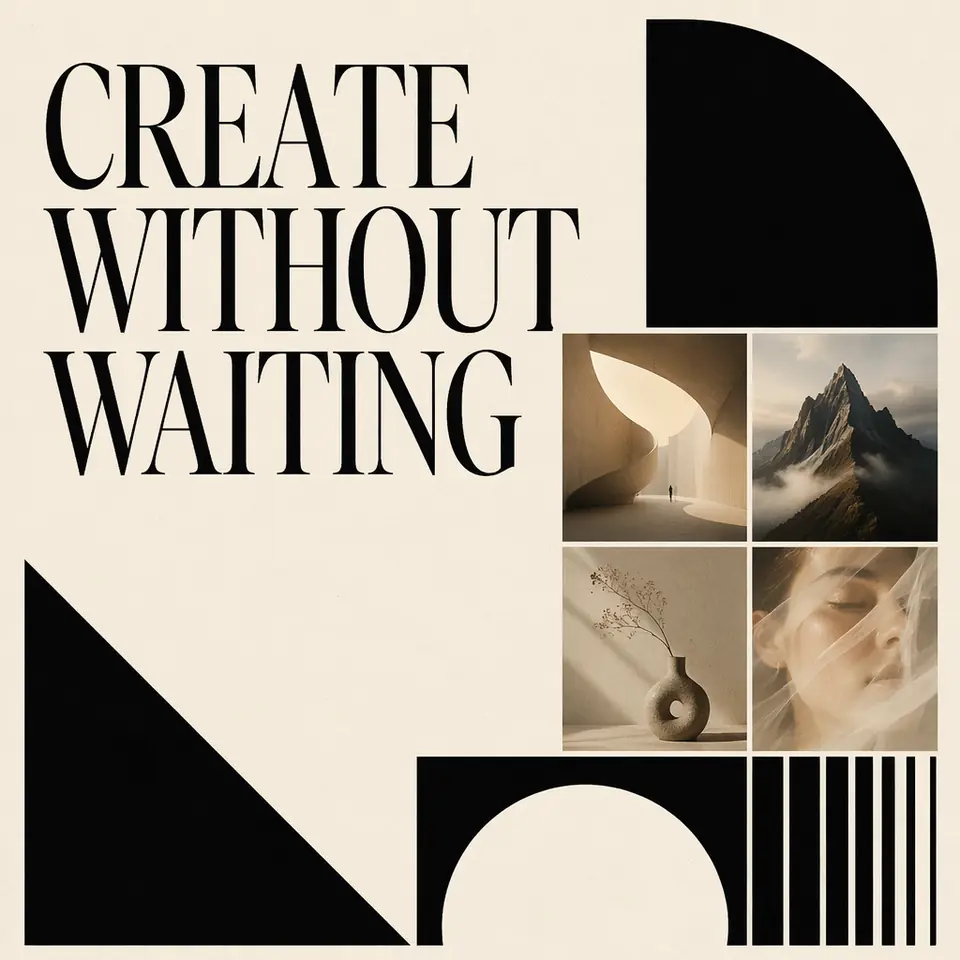
See exact generation prompt
Square editorial poster. Exact headline "CREATE WITHOUT WAITING". Cream paper, black geometric blocks, small AI image thumbnails, no extra text.
Retouch regularly without locking every edit
Use current included access for an initial look. A plan is the primary offer for repeat portrait work, while non-expiring credits remain available for occasional edits.
Separate the requested transformation from the identity, geometry, labels, layout, and lighting that must remain fixed.
Assign each image a role such as base scene, product, pose, palette, texture, style, or layout.
Create and revise posters, labels, UI, diagrams, packaging, and localized graphics with exact quoted copy.
The picker and catalog include only live image models whose input contract accepts images.
Choose an AI image editing model
 KREAKREA 2 Turbo
- Input → output
- text / image → image
- Released
- May 12, 2026
- Capabilities
- Identity editing · Character sheets · Inpainting · Outpainting
- Resolution
- 512–2048 px
- Formats
- PNG · JPG · WEBP
- References
- Up to 2 images
Fast aesthetic image generation, identity-aware editing, character sheets, inpainting, and outpainting with KREA 2 Turbo.
 Black Forest LabsFLUX.2 [klein] 9B
- Input → output
- text / image → image
- Released
- Jan 23, 2026
- Capabilities
- Edit
- References
- Up to 4 images
- Resolution
- 128–2048 px
- Formats
- JPG · PNG · WEBP
Balanced FLUX.2 image model for prompt accuracy, editing, references, and fast production use.
Black Forest LabsFLUX.1 Schnell- Input → output
- text / image → image
- Released
- Aug 1, 2024
- Capabilities
- Fast generation · Prompt adherence · Variations
- Resolution
- 512–2048 px
- Formats
- PNG · JPG · WEBP
- References
- Up to 1 image
Fast FLUX image model for quick text-to-image drafts, variations, and lightweight edits.
 Stability AISDXL
- Input → output
- text / image → image
- Released
- Jul 26, 2023
- Capabilities
- LoRA · ControlNet · Inpainting
- Resolution
- 512–1536 px
- Formats
- PNG · JPG · WEBP
- References
- ControlNet · Guide image
Flexible SDXL workflow with checkpoint, LoRA, ControlNet, inpainting, and style controls.
Stability AIStable Diffusion 1.5- Input → output
- text / image → image
- Released
- Oct 20, 2022
- Capabilities
- Checkpoints · LoRA · Inpainting
- Resolution
- 512–1024 px
- Formats
- PNG · JPG · WEBP
- References
- Checkpoints · LoRA
Classic SD 1.5 workflow for fast image generation with many checkpoints and LoRAs.
 ByteDanceSeedream 5.0 Lite
- Input → output
- text / image → image
- Released
- Feb 24, 2026
- References
- Up to 14 images
- Formats
- JPG · PNG · WEBP
ByteDance image model for fast generation, reference images, and polished social-ready visuals.
 Black Forest LabsFLUX.2 [flex]
- Input → output
- text / image → image
- Released
- Nov 25, 2025
- Capabilities
- Edit
- Resolution
- 768–2048 px
- Formats
- JPEG · PNG
- References
- Up to 4 images
Flexible FLUX.2 model for higher-control image generation and reference-guided editing.
 Black Forest LabsFLUX.2 [pro]
- Input → output
- text / image → image
- Released
- Nov 25, 2025
- Capabilities
- Edit
- Resolution
- 768–2048 px
- Formats
- JPEG · PNG
- References
- Up to 4 images
Higher-quality FLUX.2 model for polished visuals, detailed prompts, and production images.
 PramaBackground Remover
- Input → output
- image → image
- Released
- Jan 20, 2025
- Input
- Image required
- Formats
- PNG (Transparent)
Background removal model that isolates the subject and outputs a clean cutout from an image.
 S-Lab, NTURestoring old photo
- Input → output
- image → image
- Released
- Aug 8, 2022
- Capabilities
- Face restoration · Upscale
- Input
- Image required
- Resolution
- Up to 4K upscale
- Formats
- PNG · JPG · WEBP
Face restoration model for repairing old, blurry, damaged, or low-resolution portraits.
 Jason AnticColourising old photo
- Input → output
- image → image
- Released
- May 20, 2020
- Capabilities
- Photo colorization · Restoration
- Input
- Image required
- Resolution
- Up to 2048 px
- Formats
- PNG · JPG · WEBP
Photo colorization model for adding natural color to black-and-white or faded images.

 OpenAIGPT Image
- Input → output
- text / image → image
- Released
- Sep 8, 2026
- In / out price
- $5.5 in · $33 out /1M tokens
- Capabilities
- Edit · Transparency
- Resolution
- 1024–3840 px (1K · 2K · 4K)
- Formats
- PNG · JPEG · WEBP
OpenAI image model for precise prompt following, references, text rendering, and edits.
 OpenAIGPT Image 2.5 Lite
- Input → output
- text / image → image
- Released
- Apr 21, 2026
- In / out price
- $5.5 in · $33 out /1M tokens
- Capabilities
- Edit · Transparency
- Resolution
- 1024x1024 · 1024x1536 · 1536x1024
- Formats
- PNG · JPEG · WEBP
Lightweight OpenAI image model for fast generation and reference edits.
 GoogleNano Banana 2
- Input → output
- text / image / video → image
- Released
- Feb 26, 2026
- Capabilities
- Edit
- References
- Up to 14 images
- Resolution
- 0.5K · 1K · 2K · 4K
- Formats
- JPG · PNG · WEBP
Gemini image model for fast creative generation, reference edits, and visual reasoning.
GoogleNano Banana 2 Lite- Input → output
- text / image / video → image
- Released
- Feb 26, 2026
- Resolution
- 0.5K · 1K · 2K
- Formats
- JPG · PNG · WEBP
- References
- Up to 14 images
Lighter Nano Banana 2 image model for faster generation, reference edits, and efficient visual iteration.
 AlibabaQwen Image 3.0
- Input → output
- text / image → image
- Released
- Aug 4, 2026
- Capabilities
- Edit
- References
- Up to 3 images
- Formats
- JPG · PNG · WEBP
Qwen image model for prompt-faithful generation, references, and strong text-in-image tasks.
 xAIGrok Imagine Image
- Input → output
- text / image → image
- Released
- Aug 10, 2026
- References
- 1 image
Grok image model for fast imaginative visuals, stylized concepts, and reference-guided outputs.
 AlibabaQwen-Image-2.1-Turbo
- Input → output
- text / image → image
- Released
- Oct 9, 2026
- Price
- ≈ $0.0155/image
- Capabilities
- Edit
- References
- Up to 10 images
- Resolution
- 192–4096 px
Low-cost image generation and multi-reference editing with LLM prompt rewriting
 GoogleNano Banana 2.1
- Input → output
- text / image / video → image
- Released
- Oct 6, 2026
- Price
- ≈ $0.0375–0.134/image
- Capabilities
- Edit
- References
- Up to 14 images
- Resolution
- 1K · 2K · 4K
Sharper graphic composition and subject consistency, with multi-reference input and live search grounding
 Black Forest LabsFLUX 3 Image
- Input → output
- text / image → image
- Released
- Oct 1, 2026
- Price
- ≈ $0.0264–0.333/image
- Capabilities
- Edit
- References
- Up to 10 images
- Resolution
- 0.75K · 1K · 2K · 4K
Native 4K image generation and editing with precise multi-reference control
Choose an image editor by what must stay unchanged
Reference capacity, text rendering, identity preservation, edit precision, speed, and output size are distinct model strengths.
 FLUX.2 [klein] 9B
- Best for
- Fast reference-based edits and iterative image transformation
- Why choose it
- The default editing model exposes references, prompt guidance, speed, quality, and multiple-result controls.
- Watch for
- Aggressive edits or acceleration can weaken identity and small-detail preservation.
 GPT Image
- Best for
- Exact instructions, visual text, multi-reference composition, and broad controlled edits
- Why choose it
- Useful when the edit has explicit change-and-preserve rules or quoted copy.
- Watch for
- Check every preserved label, face, hand, product edge, and source-specific detail.
 Nano Banana 2
- Best for
- Fast conversational photo editing and compositing
- Why choose it
- Supports image-conditioned iteration across broad visual tasks.
- Watch for
- State the base image and role of every reference or the composition may drift.
 Qwen Image 3.0
- Best for
- Reference-led image creation and editing
- Why choose it
- Accepts multiple reference images in a dedicated image-editing contract.
- Watch for
- Reference count alone does not define priority; label every image role in the prompt.
 Seedream 5.0 Lite
- Best for
- High-quality generation and image-conditioned revisions
- Why choose it
- Provides a current editing-capable model for polished visual exploration.
- Watch for
- Review exact identity, text, product geometry, and local edit boundaries before approval.
What AI photo editing cannot guarantee
Faces, hands, labels, logos, seams, product geometry, reflections, and background objects can drift even when the prompt says to preserve them.
Lighting, color, texture, pose, framing, and nearby objects can change outside the requested area. Compare before and after at full resolution.
Quoted copy can still be misspelled, duplicated, omitted, or restyled. Proofread every character and verify language direction.
Only edit images, products, trademarks, and likenesses you are authorized to use; avoid deceptive alterations and false endorsements.
AI-edited images must not be presented as unaltered documentary evidence. Preserve originals and disclose material edits where appropriate.
Image editor examples
Browse real image editor examples made with giz.ai.
How this page was reviewed
Written by giz.ai Product Team · Reviewed by giz.ai Model Operations · Updated 2026-07-16
giz.ai publishes this AI photo editor page about its own product. Model names, inputs, controls, access, and plan requirements come from the live giz.ai catalog; examples and editorial guidance explain practical use without promising flawless output.
- Match the AI photo editor default, offered models, and example inputs to active giz.ai model contracts.
- Run the public form through model selection, example application, and the canonical Assistant handoff.
- Compare visible edit examples against their change-and-preserve prompts, source roles, and stated limitations.
- Verify one canonical URL, visible FAQs, structured data, internal links, desktop layout, and mobile layout.
AI image editor FAQ
Can I edit an image without signing up?
Some editing-capable models include anonymous use. Current access and request limits appear on each model card before you continue.
How do I keep a face, product, or layout unchanged?
Name the source image as the base, describe only the requested change, and explicitly list identity, geometry, labels, pose, camera angle, layout, lighting, and surrounding objects to preserve.
Can I use multiple reference images?
Yes, when the selected model supports multiple images. Give every upload a clear role such as base scene, product, garment, pose, palette, style, texture, or layout.
Which models appear in the image editor?
Only live image-generation models whose actual field contract accepts image input. Text-only image models are excluded from both the picker and catalog.
Can AI edit text inside an image?
Models suited to visual text can revise posters, labels, packaging, UI, and localized assets. Quote exact copy, define placement and hierarchy, and forbid extra words.
What makes a reliable edit prompt?
Use a change-and-preserve contract: change only the named element, preserve the listed invariants, match physical lighting and shadows, and make one correction per revision.
What image sizes and formats are available?
Size, quality, output format, background, reference count, and variation count come from the selected editing model and appear in its live settings.